
The recent energy crisis has forced the Government to activate an urgent fiscal response with measures affecting a wide range of taxes: personal income tax, VAT, corporate tax, excise taxes, local taxation (IAE, IBI, ICIO) and public fees. The objective is to contain costs, support economic decisions, and cushion the impact of rising energy prices.

 On March 21, 2026, the Royal Decree-Law 7/2026, which approves theComprehensive Response Plan to the Crisis in the Middle East, pending parliamentary validation.
The military conflict that began on February 28 between the United States and Israel against Iran has caused significant global economic effects. The blockade of the Strait of Hormuz and the damage to strategic gas and oil infrastructure have led to sharp increases and high volatility in crude oil and gas prices.
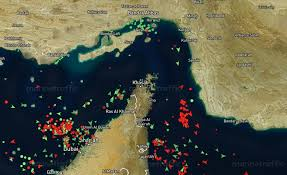
Blockade of the Strait of Hormuz

 In line with measures adopted during previous crises —such as the war in Ukraine— the Government is implementing a plan that includes:
 Temporary measures: energy tax reduction, aid, and strengthening of the social bonus.
 Structural measures: promotion of renewables, energy efficiency, and reduction of fossil fuel dependency.
Below, we detail the main tax measures, both in direct and indirect taxation, aimed at reducing costs., promote efficient investments and accelerate the electrification of the economy.
 Personal Income Tax (IRPF)
1.1 Deduction for energy efficiency improvement works 

- Its application is extended until December 31, 2026, with an option until 2027 for rental properties.
- Deductions of 20% and 40% are maintained according to reduction in consumption or improvement in energy demand.
 Attention:Requires energy certificates and compliance with deadlines, especially for rented properties.
1.2 Deduction for electric vehicles and charging points 
- Extended until December 31, 2026.
- Deduction of 15% of the acquisition value of new electric vehicles.
- Includes advances of at least 25% within the validity period.
- The 15% also applies for installing charging points.
 Important: Not applicable if the goods are used for economic activity (or are used later).
1.3 New deduction for energy self-consumption systems 

For installations made during 2026:
- 10% for individual installations.
- 20% for residential buildings.
- Maximum base:5,000 €/year.
Attention: It is not compatible with other deductions on the same installation.
 Value Added Tax (VAT)
Until June 30, 2026, the VAT decreases from 21% to 10% .for:
- Electricity with contracted power <10 kW.
- Beneficiaries of the severe social bonus or at risk of exclusion..
- Natural gas, briquettes, pellets, and firewood.
- Fuels and combustibles.
The reduction in June will depend on the evolution of the CPI..
 Corporate Tax (IS)
Applicable to fiscal years starting from January 1, 2025 and not concluded by 03/22/2026.
- Extension until 2026 of the freedom of depreciation for renewable installations.
- Extension in 2026 for investments in electric vehicles and charging infrastructures.
3.1 Freedom of depreciation in renewables
- For operational installations between 2023 and 2026.
- Requires maintaining an average workforce for 24 months.
Non-compliance requires regularization with interest.
3.2 Freedom of depreciation in electric vehicles 
- Applicable to vehicles and infrastructures related to economic activity.
Review compatibility with other incentives.
 ITP and AJD
Newexemptionfor transmissions related to Energy Savings Certificates (CAE) according to RD 36/2023.
 Hydrocarbon Tax
The rates are reduced to the minimum allowed by the EU until 30/06/2026, applicable to:
Tax rates by product (Tariff 1, art. 50 Law 38/1992)
Product | General rate | Special rate |
Leaded gasoline | 433.79 €/1,000 L | 72 €/1,000 L |
Unleaded gasoline ≥98 I.O. | 307.71 €/1,000 L | 51.29 €/1,000 L |
Other unleaded gasolines | 304.32 €/1,000 L | 54.68 €/1,000 L |
General use diesel | 267.31 €/1,000 L | 62.69 €/1,000 L |
Special fuel use diesel | 17.09 €/1,000 L | 3.91 €/1,000 L |
Fuel oils | 12.35 €/t | 2.65 €/t |
General use LPG | 57.47 €/t | - |
LPG for other uses | 0 €/t | - |
General use natural gas | 1.15 €/GJ | - |
Natural gas for other uses (non-cogeneration) | 0.30 €/GJ | - |
Professional use natural gas | 0.15 €/GJ | - |
General use kerosene | 306 €/1,000 L | 72 €/1,000 L |
Kerosene for other uses | 0 €/1,000 L | - |
Bioethanol/biomethanol blended with gasoline ≥98 I.O. | 307.71 €/1,000 L | 51.29 €/1,000 L |
Bioethanol/biomethanol blended with other gasolines | 304.32 €/1,000 L | 54.68 €/1,000 L |
Biodiesel for fuel use | 267.31 €/1,000 L | 62.69 €/1,000 L |
Biodiesel/biomethanol for special fuel use | 17.09 €/1,000 L | 3.91 €/1,000 L |
 The official table of rates is fully maintained. If the fuel CPI for April does not exceed +15%, the reduction will be eliminated in June.
 Partial refund for professional diesel
From March 22 to June 30, 2026, the refund is set at 0 €, suspending the system. Sectors with high fuel consumption must review their costs.
 Special Tax on Electricity
From 5.11269632% to 0.5% until 30/06/2026.
European minimums:
- 0.5 €/MWh (professional use)
- 1 €/MWh (others)
 Tax on the Value of Electricity Production
- Q1 2026: reduction of 10% (base = 90%).
- Q2 2026: reduction of 100% (base = 0).
Affects fractional payments and tax planning in the energy sector.
 Tax on Economic Activities (IAE)
New definition of computable installed power:
 Only elements directly affected by production.
 Excludes heating, lighting, ovens, boilers, elevators, etc.
Conversion to kW: 1 HP = 0.736 kW.
Test benches: only 10 % of the power.
Backup equipment: exempt if declared.
 Property Tax (IBI)
Municipalities may apply up to 50 % discount for renewable installations.
Tax on Constructions, Installations, and Works (ICIO)
Discount of up to 95 % for solar or ambient energy installations, subject to administrative approval.
 Do you need help applying these measures?
The tax advisors from GCE Group are at your disposal to:
Analyze how each measure affects your business or personal situation.
Identify deductions, discounts, and tax opportunities.
Optimize investments in energy efficiency or renewables.
Review your cost structure in light of regulatory changes.
 You can contact our advisors to resolve any inquiries or study your case in detail.
Visit our YouTube Channel for more information!

More than 50,000 companies use Odoo
to grow their business.
Join us to make your company a better place.